CJC-1295 + GHRP-2 (10 mg Blend) Dosage Protocol
CJC-1295 + GHRP-2 Dosage Chart
The CJC-1295 + GHRP-2 peptide blend is dosed at 150 mcg–300 mcg daily via subcutaneous injection in educational protocols. A 10 mg blend reconstituted with bacteriostatic water yields about 3.33 mg/mL. This information is for research and educational use only.
- Reconstitute: Add 3.0 mL bacteriostatic water → ~3.33 mg/mL concentration (1 unit ≈ 33.3 mcg).
- Typical daily range: 100–300 mcg once daily (gradual titration).
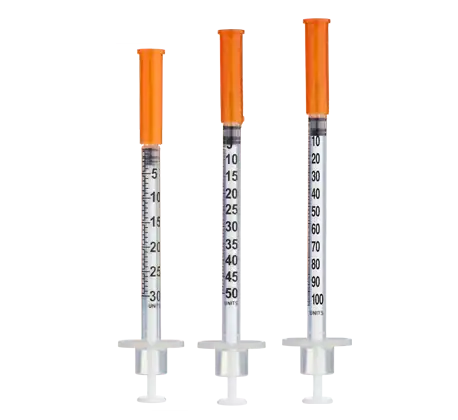
- Easy measuring: At 3.33 mg/mL, 1 unit = 0.01 mL ≈ 33.3 mcg on a U-100 insulin syringe.
- Storage: Lyophilized: refrigerate at 2–8 °C (35.6–46.4 °F) or freeze at −20 °C (−4 °F) for long-term; after reconstitution, refrigerate and use within 2–4 weeks.
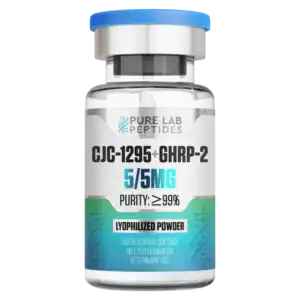
CJC-1295 is a long-acting GHRH analog that can elevate GH levels 2–10× baseline for approximately 6 days and increase IGF-1 by 1.5–3× for 9–11 days[1]. GHRP-2 is a ghrelin-mimetic secretagogue with a plasma half-life of ~30 minutes that triggers rapid GH pulses peaking within ~25 minutes of administration[3]. Combining these peptides leverages GHRP-2’s acute pulsatile release with CJC-1295’s sustained action. This educational protocol presents a once-daily subcutaneous approach using a practical dilution for clear insulin-syringe measurements.
Related research: For distinct compound, component, or formulation evidence and safety context, read What Is GHRP-2? Mechanism, Benefits, Risks, and Alternatives and CJC-1295 DAC Peptide: Benefits, Uses, Side Effects, Dosage, and Research. These links are comparisons only; the compounds and formulations should not be treated as interchangeable.
Dosing & Reconstitution Guide
Educational guide for reconstitution and daily dosing
Standard / Gradual Approach (3 mL = ~3.33 mg/mL)
| Week | Daily Dose (mcg) | Units (per injection) (mL) |
|---|---|---|
| Weeks 1–2 | 150 mcg (0.15 mg) | 4.5 units (0.045 mL) |
| Weeks 3–12 | 300 mcg (0.30 mg) | 9 units (0.09 mL) |
Frequency: Tie timing to the research design. Human work supports acute synergistic GH release when GHRH and a growth hormone-releasing peptide are combined[6]. The cited study used controlled intravenous administration and does not define a bedtime subcutaneous schedule for this exact blend.
Reconstitution Steps
- Draw 3.0 mL bacteriostatic water with a sterile syringe.
- Inject slowly down the vial wall; avoid foaming.
- Gently swirl/roll until dissolved (do not shake).
- Label and refrigerate at 2–8 °C (35.6–46.4 °F), protected from light.
Advanced / Twice-Daily Approach (3 mL = ~3.33 mg/mL)
Some protocols split the daily dose into two administrations (morning upon waking, fasted; and evening before bed) to enhance GH pulsatility[1]. Ensure doses are at least 3–8 hours apart to avoid overlapping GH pulses.
| Week | Dose per Injection (mcg) | Units (per injection) (mL) | Total Daily (mcg) |
|---|---|---|---|
| Weeks 1–2 | 100 mcg (0.10 mg) | 3 units (0.03 mL) | 200 mcg |
| Weeks 3–12 | 150 mcg (0.15 mg) | 4.5 units (0.045 mL) | 300 mcg |
For ≤10-unit (≤0.10 mL) administrations, consider 30- or 50-unit insulin syringes for improved readability.
Supplies Needed
Plan based on an 8–16 week daily protocol with gradual titration (once-daily schedule).
-
Peptide Vials (CJC-1295 + GHRP-2, 10 mg each):
- 8 weeks ≈ 2 vials
- 12 weeks ≈ 3 vials
- 16 weeks ≈ 4 vials
-
Insulin Syringes (U-100):
- Per week: 7 syringes (1/day)
- 8 weeks: 56 syringes
- 12 weeks: 84 syringes
- 16 weeks: 112 syringes
-
Bacteriostatic Water (10 mL bottles): Use ~3.0 mL per vial for reconstitution.
- 8 weeks (2 vials): 6 mL → 1 × 10 mL bottle
- 12 weeks (3 vials): 9 mL → 1 × 10 mL bottle
- 16 weeks (4 vials): 12 mL → 2 × 10 mL bottles
-
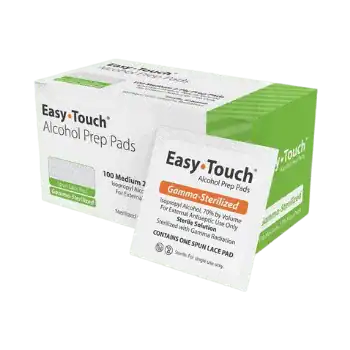
Alcohol Swabs: One for the vial stopper + one for the injection site each day.
- Per week: 14 swabs (2/day)
- 8 weeks: 112 swabs → recommend 2 × 100-count boxes
- 12 weeks: 168 swabs → recommend 2 × 100-count boxes
- 16 weeks: 224 swabs → recommend 3 × 100-count boxes

Protocol Overview
Concise summary of the once-daily regimen.
- Goal: Support enhanced GH pulsatility and sustained IGF-1 elevation over a defined research period[1].
- Schedule: Daily subcutaneous injections for 8–12 weeks (extend to 16 weeks if desired).
- Dose Range: 100–300 mcg daily (total blend) with gradual titration.
- Reconstitution: 3.0 mL per 10 mg vial (~3.33 mg/mL) for accurate unit measurements.
- Storage: Lyophilized refrigerated or frozen; reconstituted refrigerated; avoid repeated freeze–thaw.
Dosing Protocol
Suggested daily titration approach.
- Start: 100–150 mcg daily for Weeks 1–2 to allow acclimatization[2].
- Target: 250–300 mcg daily by Weeks 3–12.
- Frequency: Once per day (subcutaneous), preferably evening/bedtime.
- Cycle Length: 8–12 weeks; optional extension to 16 weeks.
- Timing: Inject on an empty stomach; rotate injection sites.
Storage Instructions
Proper storage preserves peptide quality[9][10].
- Lyophilized: Refrigerate at 2–8 °C (35.6–46.4 °F); freeze at −20 °C (−4 °F) for long-term storage exceeding several months.
- Reconstituted: Refrigerate at 2–8 °C (35.6–46.4 °F); use within 2–4 weeks for optimal potency.
- Allow vials to reach room temperature before opening to reduce condensation uptake.
- If longer storage of reconstituted solution is needed, aliquot into sterile containers and freeze once; avoid repeated freeze–thaw.
Important Notes
Practical considerations for consistency and safety.
- Use new sterile insulin syringes for each injection; dispose in a sharps container[7].
- Rotate injection sites (abdomen, thighs, upper arms) to reduce local irritation.
- Inject slowly on an empty stomach; GHRP-2’s GH response may be blunted by elevated blood glucose[4].
- Document daily dose and site rotation to maintain consistency.
- No post-cycle therapy is required; GH and IGF-1 levels return to baseline after cessation[1].
How This Works
CJC-1295 is a tetrasubstituted GHRH(1–29) analog engineered for extended half-life (~6–8 days) via protection from enzymatic degradation and reversible albumin binding[1]. A single dose can sustain elevated GH for approximately 6 days and IGF-1 elevation for 9–11 days. GHRP-2 is a synthetic hexapeptide ghrelin-mimetic that binds the GH secretagogue receptor (GHS-R1a), triggering acute GH pulses that peak within ~25 minutes[3]. Human research shows that GHRH and growth hormone-releasing peptide pathways can stimulate GH release synergistically[6]. This supports the pathway rationale, while the exact compounds and route in the cited study differ from this blend.
Potential Benefits & Side Effects
Observations from preclinical and clinical literature.
- Sustained elevation of GH and IGF-1 levels over extended periods with once-daily or even less frequent dosing[1].
- Long-term pediatric studies (8 months) reported no significant adverse effects or toxicities from GHRP-2 therapy[2].
- GHRP-2 may transiently increase appetite due to ghrelin-like activity[4].
- Mild, transient elevations in ACTH, cortisol, and prolactin may occur shortly after injection but remain within physiological ranges[5].
- CJC-1295 at higher doses may cause transient vasodilatory effects such as facial flushing or brief lightheadedness[1].
- Occasional mild injection-site reactions (redness, itching) may occur with subcutaneous administration.
Lifestyle Factors
Complementary strategies for best outcomes.
- Pair with a balanced, protein-forward diet tailored to energy and recovery needs.
- Combine resistance training and aerobic activity to complement GH-mediated anabolic and metabolic effects.
- Prioritize quality sleep; nocturnal GH secretion is enhanced by adequate rest.
- Inject on an empty stomach or after fasting for 2–3 hours; carbohydrate-rich meals may attenuate GHRP-2’s GH response[4].
Injection Technique
General subcutaneous guidance from clinical best-practice resources[7][8].
- Clean the vial stopper and skin with alcohol; allow to dry.
- Pinch a skinfold; insert the needle at 45–90° into subcutaneous tissue[7].
- Do not aspirate for subcutaneous injections; inject slowly and steadily[8].
- Rotate sites systematically (abdomen, thighs, upper arms) to avoid local tissue changes[11].
- Withdraw the needle at the same angle; dispose immediately in a sharps container.
Important Note
This content is intended for therapeutic educational purposes only and does not constitute medical advice, diagnosis, or treatment.
References
-
J Clin Endocrinol Metab (2006)
— Teichman SL et al. Prolonged stimulation of GH and IGF-I secretion by CJC-1295, a long-acting GHRH analog, in healthy adults -
J Clin Endocrinol Metab (1998)
— Mericq V et al. Effects of eight months treatment with graded doses of GHRP in GH-deficient children -
J Clin Endocrinol Metab (1998)
— Pihoker C et al. Pharmacokinetics and pharmacodynamics of GHRP-2: a phase I study in children -
J Clin Endocrinol Metab (2005)
— Laferrère B et al. GHRP-2, like ghrelin, increases food intake in healthy men -
Peptides (1997)
— Arvat E et al. Effects of GHRP-2 and hexarelin on GH, prolactin, ACTH, and cortisol levels in man -
Bowers et al., Journal of Clinical Endocrinology and Metabolism (1990)
– Controlled human study showing synergistic GH release when GHRH and a growth hormone-releasing peptide were combined. -
CDC
— Vaccine administration: subcutaneous route (angle/site; no aspiration) -
CDC (Subcut Injection PDF)
— Technique diagram and site guidance for subcutaneous injections -
Bachem Technical Bulletin
— Handling and storage guidelines for peptides -
Sigma-Aldrich Technical Guide
— Handling and storage of synthetic peptides -
NCBI Bookshelf
— Best practices for injection (asepsis, preparation, and administration)
Additional Research and Background
These sources provide related context and are not presented as support for a specific statement above.
-
Subcutaneous Drug Injection Review (PMC)
— Pharmacologic considerations of the subcutaneous route
Related research, protocols, and guides
Explore the available research context, protocol variants or comparisons, and practical guides. When vial-size variants exist, they remain separate because vial strength, concentration, and syringe-unit calculations can differ. Related compounds and blends are comparisons only, not interchangeable.
Research overview
Related protocols and comparisons
- GHRP-2 (5 mg Vial) Dosage Protocol
- GHRP-2 (10 mg Vial) Dosage Protocol
- CJC-1295 DAC (2 mg Vial) Dosage Protocol
- CJC-1295 DAC (5 mg Vial) Dosage Protocol
- CJC-1295 DAC (5 mg) + Ipamorelin (5 mg) Stack Dosage Protocol
- CJC-1295 DAC (2 mg) + Ipamorelin (5 mg) Stack Dosage Protocol
- AOD-9604 + CJC-1295 + Ipamorelin (12 mg Blend) Dosage Protocol